Guarionex Rodriguez, Jr.'s Planets in Transit exhibit at Ace Hotel Brooklyn
“To Keep Dancing, To Keep Being Free”
Guarionex Rodriguez, Jr.'s Planets in Transit
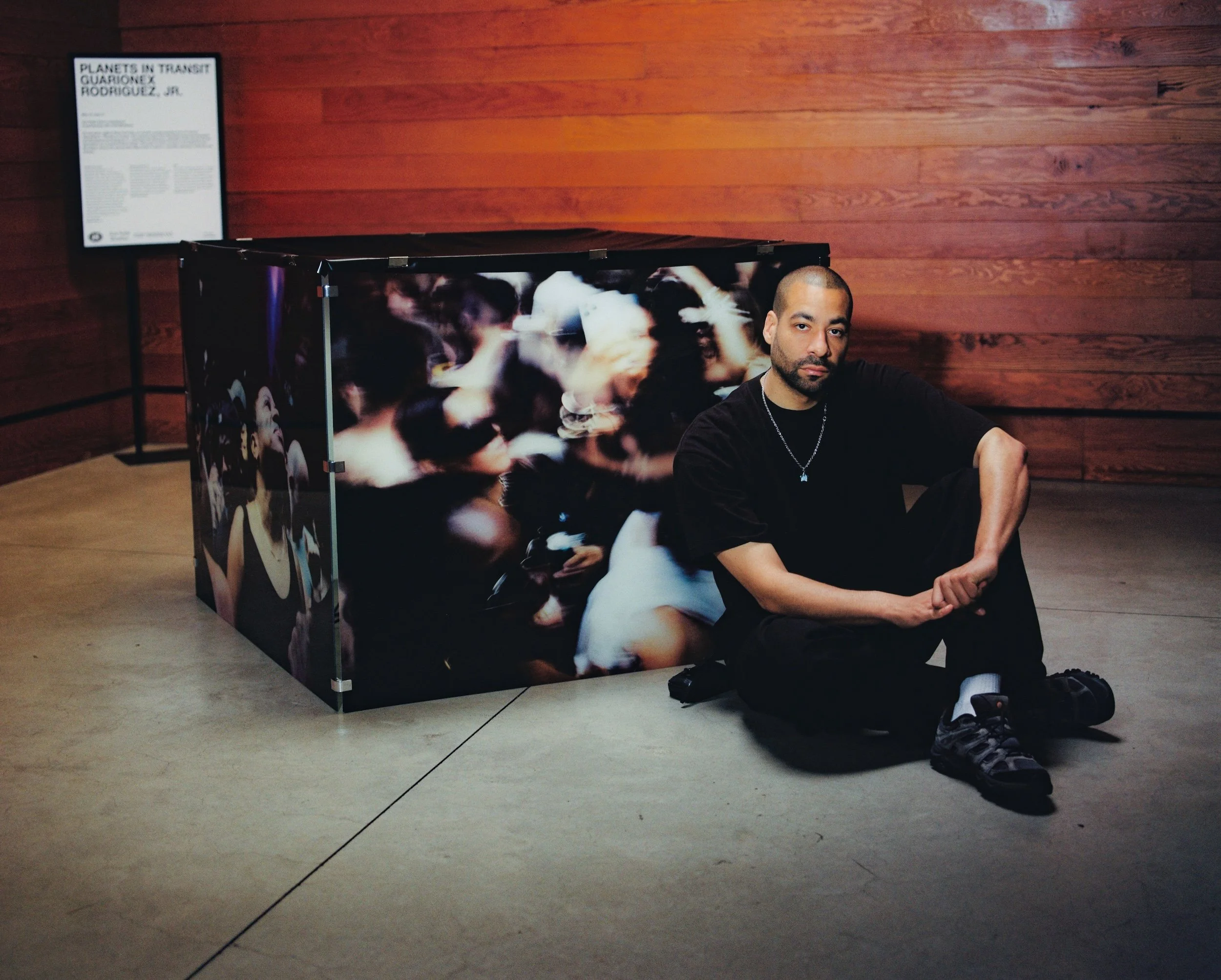
Photo credit: Tamara Tsehai Tesfai (@shotbytamara)
Guarionex Rodriguez, Jr. 🇩🇴 (@guarionex_jr) has spent the better part of a decade working in two modes at once: the slow, deliberate stillness of a 4x5 camera trained on family in the Dominican Republic, and the blur of a dance floor caught mid-breath. Planets in Transit, his exhibition at the Ace Hotel Brooklyn, brings that second world into full focus.
FORGOTTEN LANDS co-founder Cory Torres Bishop sat down with Guario in early May, just after he wrapped his month-long stay at the hotel where he lived and worked, editing and scanning through years of work. He was one of four artists selected by Field Meridians for the Ace Hotel Brooklyn's 2026 artist-in-residence program. What emerged from their conversation was less an interview than a meditation on community, documentation, and what it means to witness people at their most free.
CORY TORRES BISHOP: Alright, what’s good, Guario? You alright?
GUARIONEX RODRIGUEZ, JR: What it do. We out here.
CORY: Last time we linked up, where was that? CCCADI (Caribbean Cultural Center African Diaspora Institute). We did an interview there together. That was really nice up in Harlem.
GUARIONEX: That was a beautiful moment.
CORY: That was. I would love to know how the Ace Hotel Residency came about. Tell me how you and LinYee Yuan [Field Meridians] originally connected.
GUARIONEX: I met her through Deem Journal. They sent me an assignment to photograph LinYee for MOLD Magazine. And after that, she asked me to do some stuff for MOLD.
CORY: When was this?
GUARIONEX: The first assignment we did together was maybe four or five years ago. I just remember it was around the time of the pandemic. And then, yeah, she kept on asking me to do a couple of projects.
CORY: I love MOLD. R-I-P. I don't think she's doing MOLD anymore.
GUARIONEX: No, no, she did that on purpose, which is so badass.
CORY: I know she's onto a new project, Field Meridians. Which ties into your residency here, right?
GUARIONEX: Yeah she started doing Field Meridians, and I helped her out. It started out with helping her with some MOLD Magazine shoots, and then she asked me during the pandemic to be a part of a video called “Your Mouth Has Power” in collaboration with DeVonn Francis. After the video project, me and LinYee were just always working together for Field Meridians with workshops, talks, DJing their events, and much more. And that's how she got me kind of aligned with this Ace world stuff.
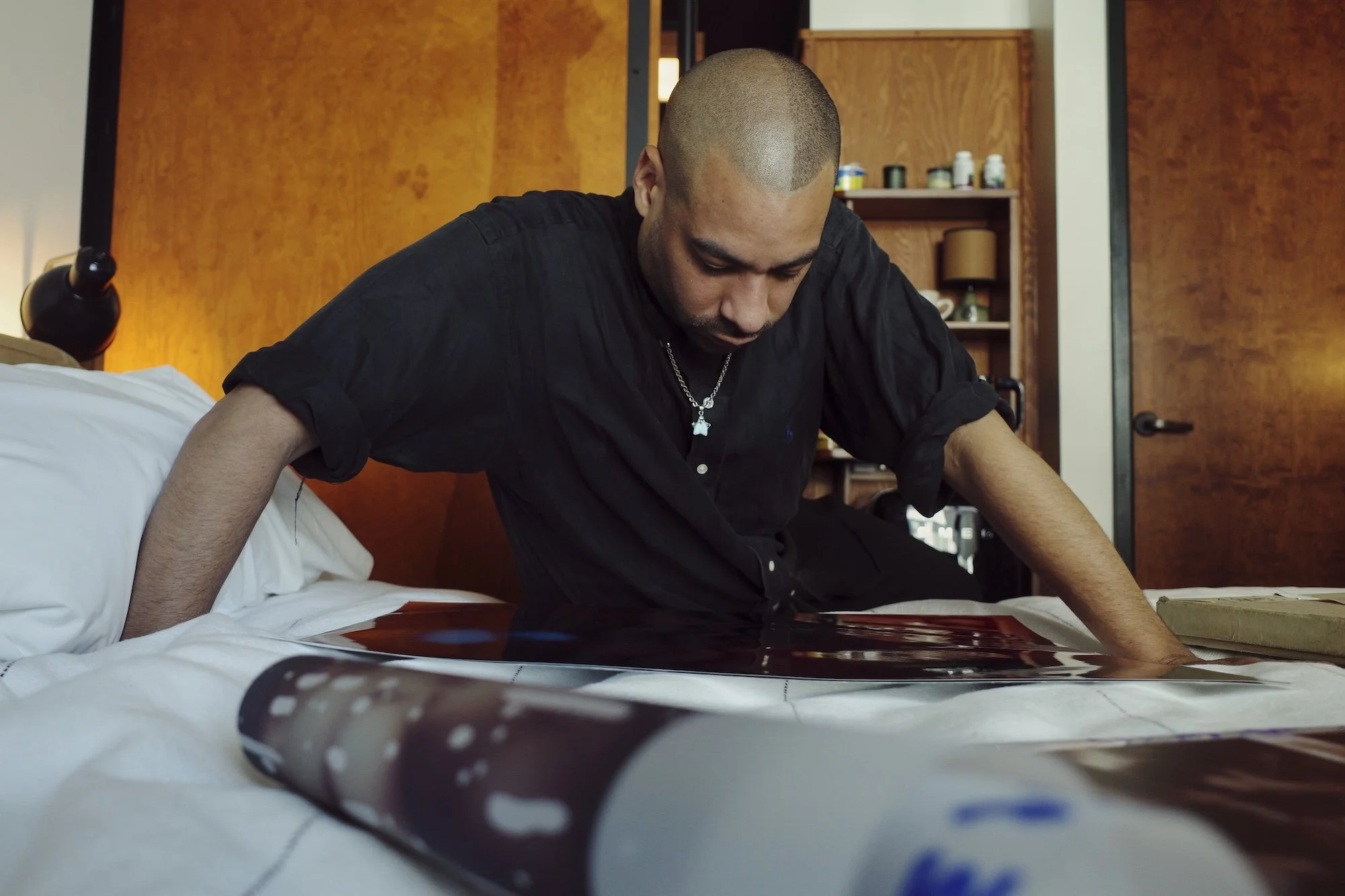
Photo Credit: Courtney Sofiah Yates (@courtsyy)
CORY: How was the month-long residency?
GUARIONEX: It was fun. It was fun pretending to live in New York…It was fun visiting New York hahaha.
CORY: Yeah, right.
GUARIONEX: You know, I was in-between housing, so I was actually staying at the hotel
CORY: Perfect timing.
GUARIONEX: It was a New York timing, you know? Living, living a life in Downtown Brooklyn. Or whatever this neighborhood…the crossroads of Cobble Hill. Almost Fort Greene. It was fun, though. It's nice to just have your bed made every day. Walk out and come back. Sometimes I forgot that they'd be doing that, and I'm like, oh, my room’s hella clean.
CORY: Did you make it sometimes?
GUARIONEX: Yeah, I made it sometimes, man. Like, “you don't have to come in,” and they still clean the shit out of it. And I was like, word. This, this takes away from my headspace.
CORY: No, it's true. How was it creating in the Ace Hotel Brooklyn?
GUARIONEX: It was good. Honestly, it helped me get aligned with just focusing on what I needed to think. I didn't have any major assignments to focus on during the month, so I was able to just sit and think and constantly think over and over to see what am I gonna do for this artist residency? How impactful can it be while it's up for three months?
CORY: Were you also physically editing while you were in there?
GUARIONEX: It was a little bit of both. I had all my prints with me. I was also editing new photos, I was creating new photos. I was actually just weaving through what made sense. I had my scanner with me. So scanning new images, scanning old images, redoing some images.
CORY: So you had a little lab in there.
GUARIONEX: Hahaha, exactly, a little lab. They didn't even know I was out there, doing the damn thing.
CORY: I'm sure, I'm sure the cleaning service was like..
GUARIONEX: What's the scanner doing over here? All the negatives just hanging. But no, it was chill. The space wasn't large enough for photoshoots, but it was big enough for me to spread things out. I had a large desk space.
CORY: Did any sound installation come into play? Were you planning sets?
GUARIONEX: Yeah. So I was gonna include a sound installation with sounds from the parties, but then I had to do a lot of major changes for the setup, so I had to pivot. It's funny because the project is about nightlife, but I didn't go out at all the whole month. So many people were worried about me. They were like, ”yo, I haven't seen you in a month.” And I'm like, “yo, relax, it’s a couple weeks.”
CORY: I love that you took the assignment seriously. So there are no sound elements in this installation explicitly?
GUARIONEX: I wish there was. But what was important was the images. How the images are viewed and seen.
CORY: Tell me more about that.
Guarionex Rodriguez, Jr. Planets in Transit, Ace Hotel Brooklyn
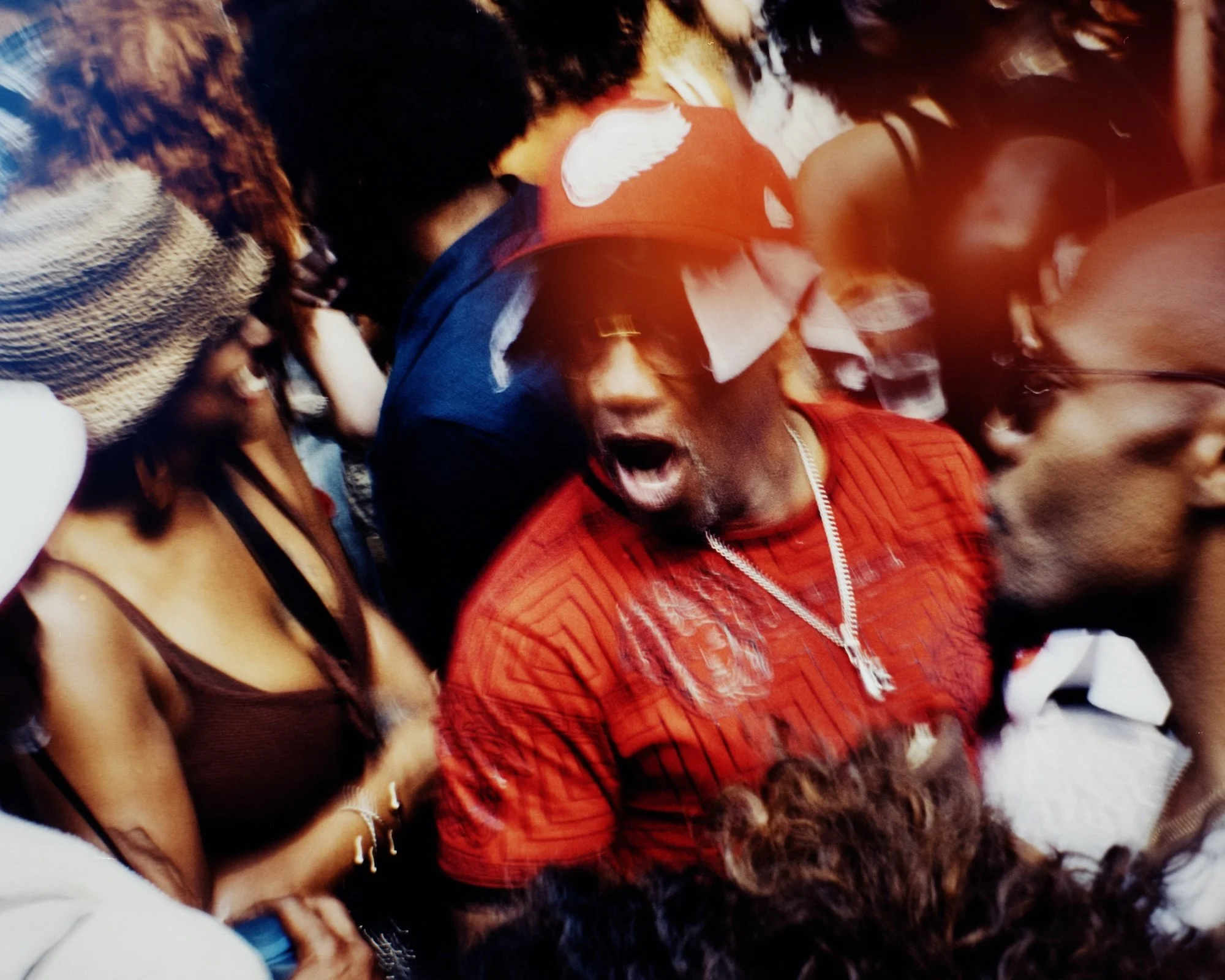
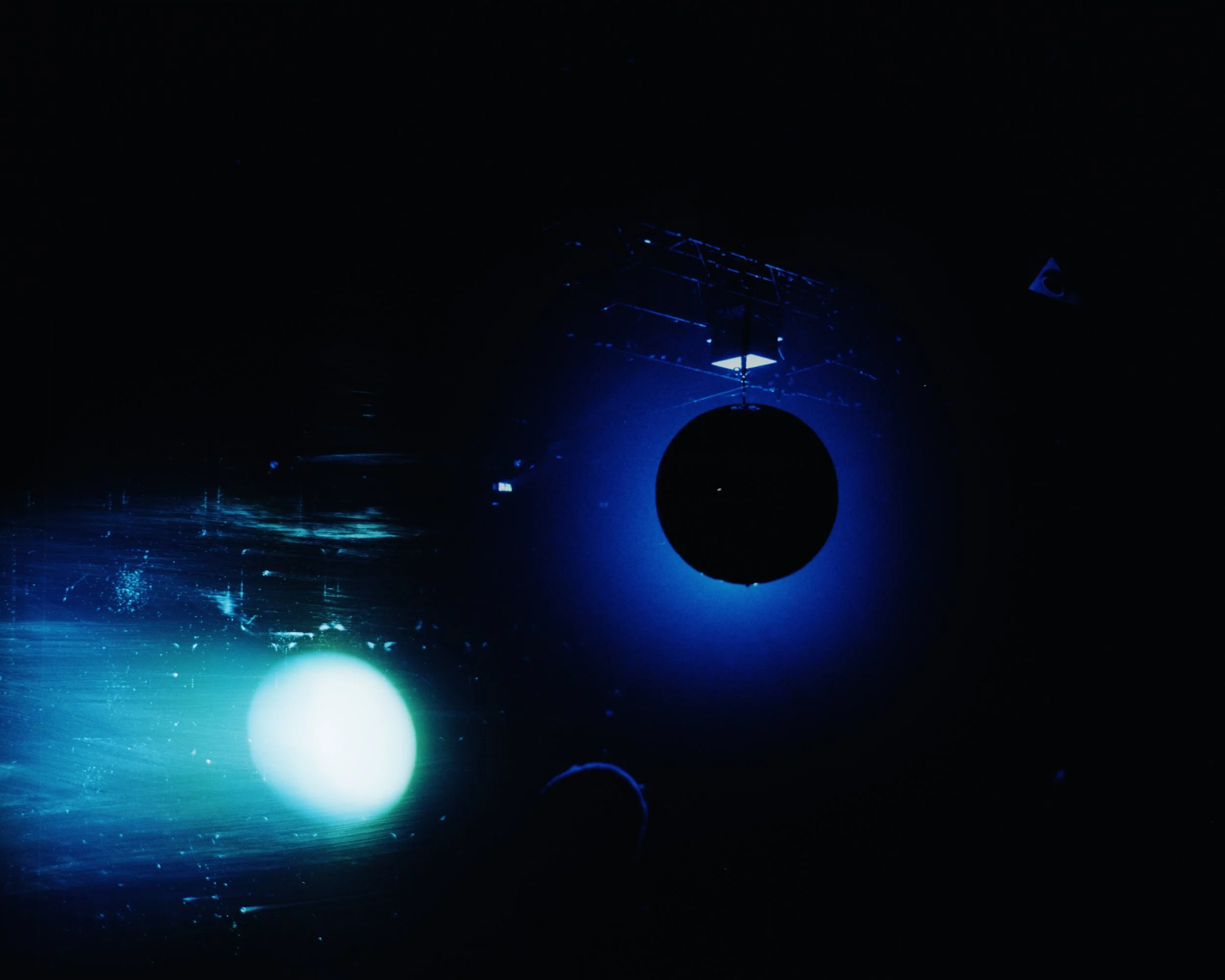
GUARIONEX: The project is Planets in Transit, and I was thinking about the dance floor and how the energy exists on the dance floor, where it feels like it lights up. I created this light box idea to let me light up the photos that I've taken and there were some limitations, like manufacturing limitations, to building out light boxes. But I then thought, let me make a large cube box so that people could walk around and not just see it on a wall, but have the physical space to walk in a circle, as if on the dance floor.
CORY: Almost sculptural, I love that you can walk around. You see different people at different angles, like you’re at a party. Did anything surprise you when you were going about making that box or the overall installation, being in the Ace Hotel, a non-traditional art space?
GUARIONEX: I think because of the limitations of the space, we can't really hang stuff on the wall…I'm not really a frame type of person…I always hang my prints loosely because I love my prints just existing within the space and not being contained in their frame. But then also, I do love ideas of sculptural elements. So making the big large cube box of prints was probably the funnest process. Because then it’s ‘how could we get the photos off the walls and onto the space and make people still view the images in a different way that isn't necessarily being stuck at a corner of a wall?’
CORY: I love art that comes off the wall, that people can engage with. You know, we have the book in front of us. You were a contributor two years ago in FORGOTTEN LANDS Volume 05: The Haunted Tropics. Thinking about Segunda Generación, which was the project that you had in the book, the second generation, the back and forth between your homeland of DR. Who was Guario three years ago? And how do you think about the project now?
GUARIONEX: To be honest, I work on multiple projects at the same time, so I'm constantly thinking from one project to the next. A lot of the Dominican Republic Segunda Generación project was happening simultaneously while I was photographing the dance floor. Because the project right now at the Ace, that's like 10 years in the making.
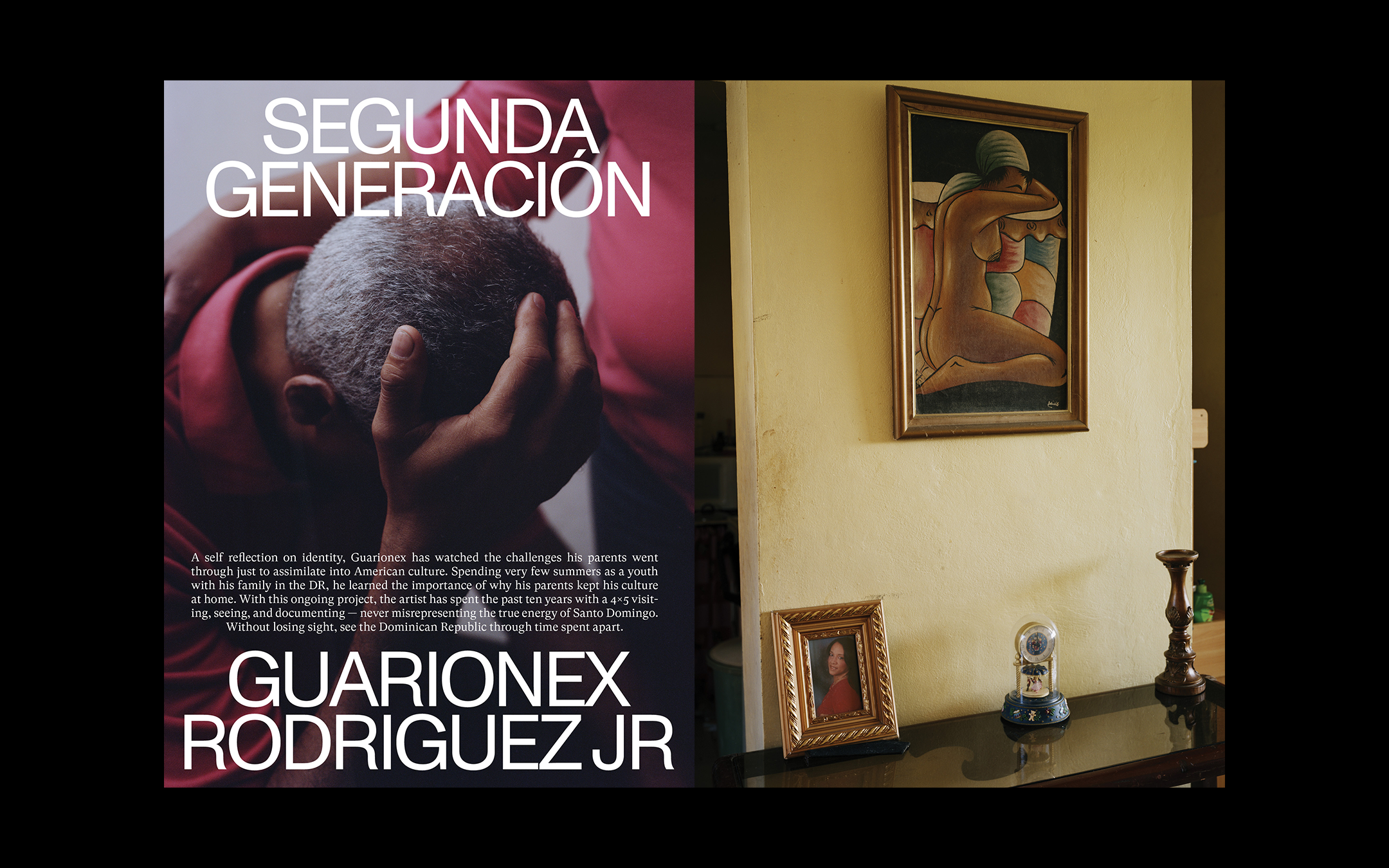
Volume 05 spreads by Guarionex Rodriguez Jr.
CORY: There's depth to it. You're not rushing it. And family and dance — why those two?
GUARIONEX: For both projects, it's about the community and connection that happens. With family, it's me going to the DR to make images of my family, of the island, and getting super familiar with people that participate in the island in so many different types of ways. The same way that I participate in my own community and cities, especially nightlife and the dance floor. Overall, it's connecting with people. It's always going to be about connecting with people.
CORY: I like how it's silhouette driven also, It could almost be my own family and friends back home in the Virgin Islands. But the dance floor could be your own familial ties, your own friends in this celestial party. Has anything shifted in your approach? Has anything stayed stubbornly Guario?
GUARIONEX: The approach is kind of different, right? For the nightlife, I'm just constantly taking pictures with my small digital camera. Snap, snap, snapping, one night could be anywhere from, 500 to a 1,000 photos.
CORY: What do you shoot on?
GUARIONEX: Ricoh GR. But for the island photos, I shoot on a 4x5, which is a large format, super slow. So I have to take my time and sit still with my subject. It's not as spontaneous. I'm creating a narrative, but for the nightlife stuff, I'm picking and choosing certain photos and then zooming in and cropping and then rephotographing them with extra lights. I have to sit down and really pick and choose what is the moment that's gonna speak to that moment of time that I capture. For the photos chosen, it's maybe within the last four or five years. There are photos specifically from Soul Summit and Papi Juice. I picked those two parties because they feel like two parties where I danced my ass off because they felt the most inclusive and safe for me to be amongst friends and strangers.
CORY: In both your works there's a real vulnerability. I know my own family, the older heads especially don't like pictures of themselves, so I can imagine there’s a bit of back and forth for them to sit with the 4x5. And I think on the dance floor too, there has to be a level of vulnerability because it's about liberation. The dance floor is liberating. People aren't on their phones, there aren't too many cameras around, and then there's you, moving through it taking photos. Do you feel it's the same level of care and vulnerability across both, or do you approach them differently?
GUARIONEX: It's kind of. When I'm on a dance floor, I'm not using any flash. So I'm very incognito. I never want to interrupt someone's moment of feeling. When I'm capturing these images, and everyone's pulling up their cameras, it feels safe to document what's happening. But I never want to take someone out of that element. And I think that's the difference between the family stuff versus the dance floor stuff. I could be more like a fly on the wall with the dance floor and I participate in it. I'm also dancing.
CORY: Does anyone ever get reluctant when you snap a lowkey photo?
GUARIONEX: I’ve never had anyone have problems with it. Besides, there are certain parties where I’m commissioned to photograph the dance. It's very strict on documentation. Because they know I'm a very incognito person. For example, documenting Nowadays, that's not a place that anyone should be documenting because they have their rules to not photograph on the dance floor. But I'm commissioned to be there. So I’ve had people stop me like, “Hey, don’t, what are you doing?” And I was like, “Don't worry. I'm not photographing anyone specific. Here look at the photos. I take super blurry photos, I'm not catching you doing anything bad.”
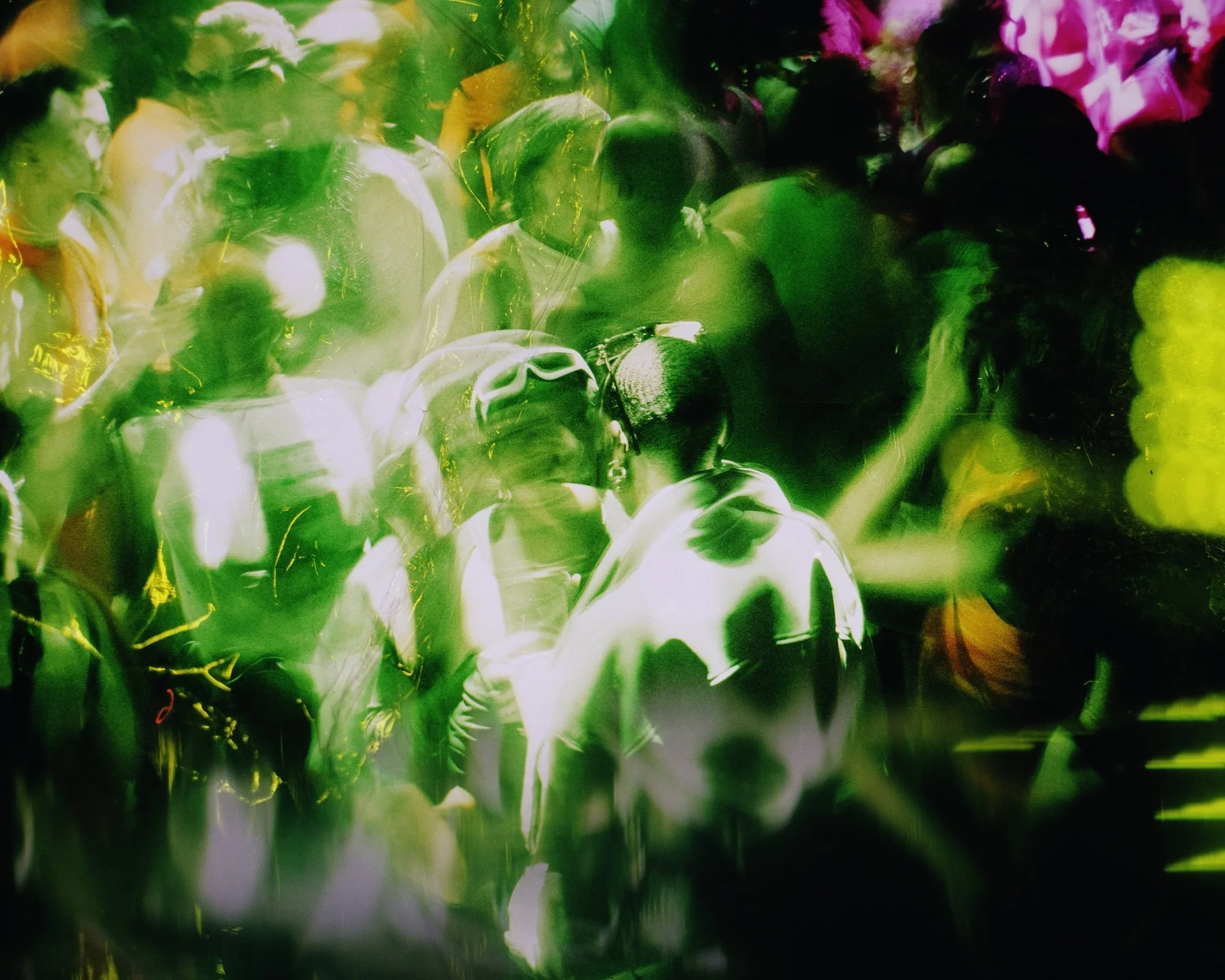
Guarionex Rodriguez, Jr. Planets in Transit, Ace Hotel Brooklyn
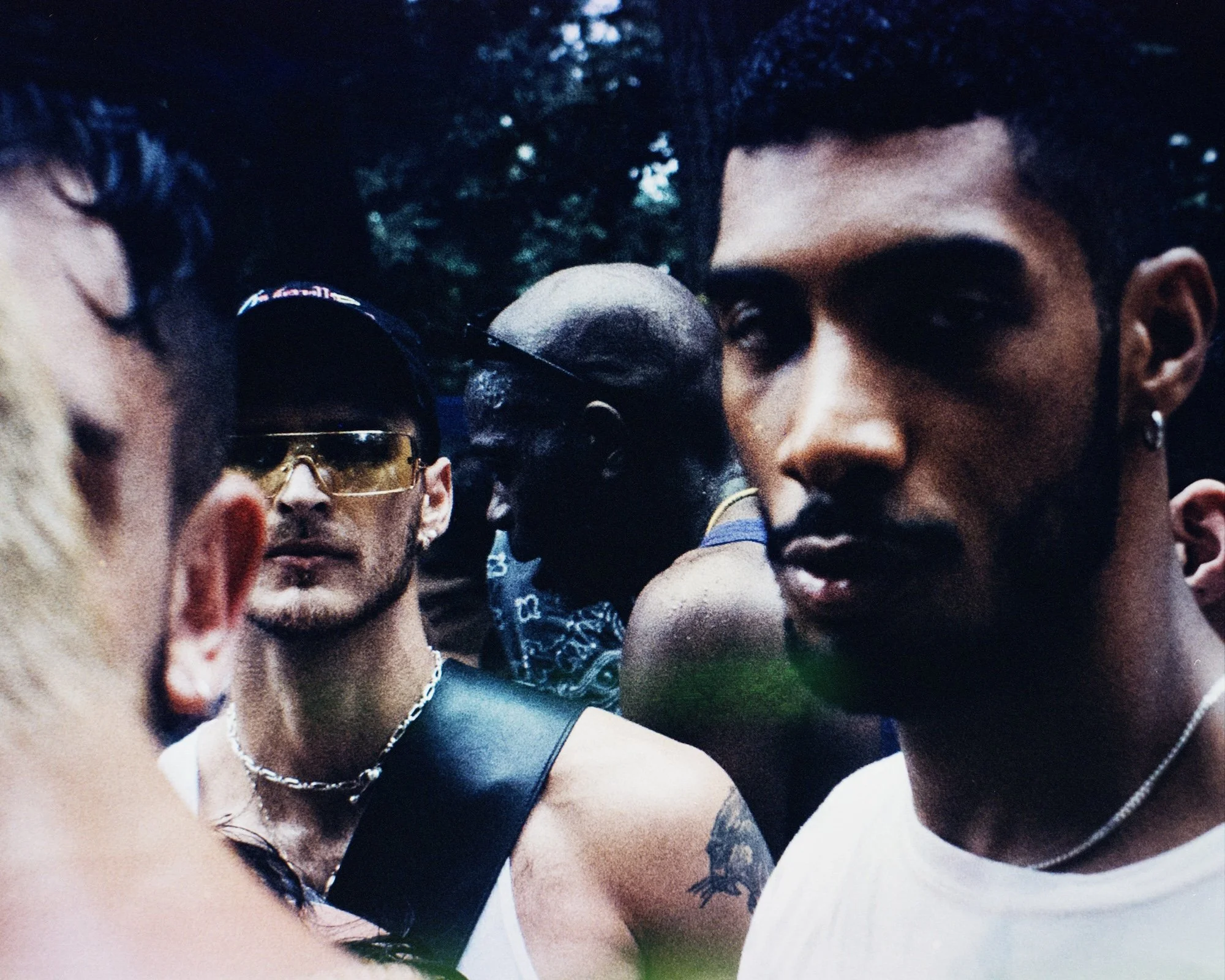
CORY: I’d love to learn a little bit about Mycelia Collective. How does that feed into your work?
GUARIONEX: Mycelia Collective is made up of six members: me, Courtney Sofiah Yates, Keenan MacWilliam, Rasaan Wyzard, Chad-Avery V. Hillard, and Cheril Sanchez. We haven't been as active because we're just busy, busy people. When we first started, we weren't as busy and we were very dedicated to meeting every month, and that helped me dissect my own work and really have a critical eye. And we would do homework assignments, challenge each other. We would be like, “Hey, I don't see you doing this or you should try that.”
CORY: We all need those people in our brain trust.
GUARIONEX: Yeah. Sometimes we're just in our own worlds and we don't know what's going on until someone else sees it. And it's like, oh, I didn't realize that I was doing this pattern.
CORY: Was there anything specific you remember from those sessions?
GUARIONEX: There was a time where we started doing homework assignments because all of our work felt was getting kind of boring. So we would write down an assignment, put it in a bowl and then pull one out. There was one that was super important to me. The word was “heritage,” so we had to tap into what heritage means to us and make a photo project out of that. And that sparked a whole new project, such as the flower project that I did.
CORY: Off of that one word?
GUARIONEX: That one word. Everyone showed up with different types of projects. I don't believe that any of our work looks similar to each other. We really took it seriously. And I saw the growth in everyone's work from the beginning to now. If it wasn't for the collective, I wouldn't have pushed this hard. The project that I had for the Ace was thanks to the Mycelia Collective pushing me to go deeper and find new images. Showing up every month was intentional, I have to show new work.
CORY: Back in school again.
GUARIONEX: Yeah, exactly. Pushing each other forward.
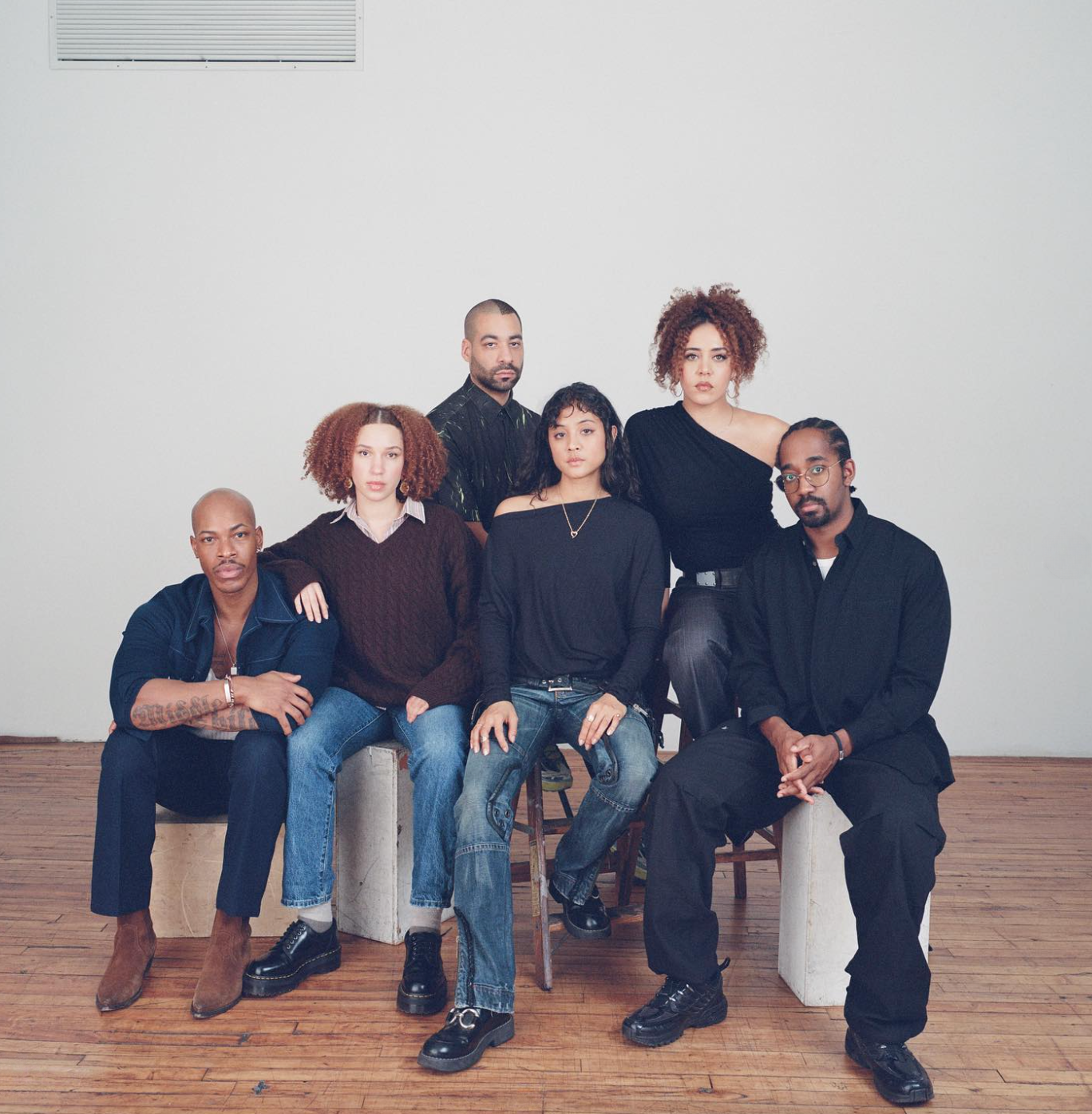
Photo credit: Miranda Barnes (@mirandabarnes)
CORY: Being Dominican from Brooklyn, being in Ace Hotel — how does that move through your work in this presentation?
GUARIONEX: My true honest answer is, because being Dominican, I felt super at home living in Bushwick where there's a large Puerto Rican and Dominican community. Feeling like there's so many Latinos over there that I can eat with and interact with. It feels like home. And then Bushwick also being the epicenter of nightlife, for house and techno music. So there was a duality of being both — feeling like home, being close to food, being close to people that feel like my cousins. I think if it wasn't for that duality, I wouldn't have felt as close to the Brooklyn neighborhood.
CORY: You have an incredible name, is it a super Dominican name?
GUARIONEX: It's both Dominican, Haitian, and Puerto Rican. The Puerto Ricans really embrace the Taino identity. Haiti and the Dominican Republic, too, there's a Guarionex rapper in Haiti. I pay attention to all the Guarionex’s. I just need to see who's doing what.
CORY: As you should hahaha. It's been great catching up with you. To close things up — the opening of Planets in Transit is May 14th. It's up until the end of July?
GUARIONEX: Yeah, July 22nd.
CORY: People are traveling from all over the world, they're gonna see your work. What are you hoping jumps out at them, or that they leave with?
GUARIONEX: I hope that people could be enlightened about what it means to be on the dance floor, and not have any kind of stereotype of what the dance floor has to be. Because some of the pieces in the show feature older generations that go to Soul Summit. And I love that there's a lot of love and care that happens on the Papi Juice dance floor. I want people to be enlightened and not take it for granted that they're in a very rich, diverse borough. Brooklyn has the diversity of different types of dance floors that cater to anybody.
CORY: And what about someone who's visiting, maybe from another country, and they see your work and they're a dancer?
GUARIONEX: I hope that they could just explore. There's so many different genres to explore in just Brooklyn. But, of course, all of New York. All of New York has their scenes. Since it's the Ace Hotel Brooklyn, we're in Brooklyn, explore. There's Public Records, Nowadays, and even smaller venues like Bossa Nova Civic Club. There's a lot like, I'm not even trying to promote. You know, there's pockets, there's corners to get to at every different place, whether it's south Brooklyn, north Brooklyn, east, west.
CORY: I think you can open up their mind to a memory they had on the dance floor, a night that was timeless. What are you hoping people feel passing through?
GUARIONEX: I just hope that people could see the show and know that it's a spiritual connection. And I hope it reminds them of the beauty that the dance floor can be for somebody. To keep dancing, to keep being free. I want everyone to see how freeing it is, the people that are on the dance floor, and to be enlightened to that freedom.
CORY: I love that, there's freedom with it and it shows in your work. Thank you Guario, so much for taking this time today.
GUARIONEX: Yeah. No, thank you.